

Diabetic Peripheral Neuropathy: Numbness and Burning in the Feet Are More Than “Poor Circulation”
Diabetic peripheral neuropathy (DPN) is one of the most common chronic complications of diabetes. It primarily damages the peripheral nerves—the nerves outside the brain and spinal cord.
The most common form is called distal symmetric sensorimotor polyneuropathy. Symptoms usually begin in both toes or the soles of the feet and gradually move upward into the lower legs. As the condition progresses, it may also affect the fingers and hands, creating the classic “stocking-and-glove” pattern.
What Types of Nerves Are Damaged?
1. Small Sensory Nerve Fibers
Small nerve fibers include unmyelinated C fibers and thinly myelinated A-delta fibers. They help transmit pain, temperature, and certain autonomic sensations.
When these fibers are damaged, symptoms may include:
-
Burning or “on-fire” sensations in the feet
-
Pins-and-needles sensations
-
Sharp, stabbing, electric-shock, or cutting pain
-
Abnormal sensitivity to heat or cold
-
Difficulty distinguishing hot from cold
-
Pain caused by very light touch
-
Discomfort from the weight of a bedsheet
-
Symptoms that become worse at night
In early small-fiber neuropathy, routine nerve-conduction studies may still appear normal. Therefore, one normal test does not always rule out early nerve damage.
2. Large Sensory Nerve Fibers
Large, myelinated sensory fibers carry information related to touch, pressure, vibration, and joint-position awareness.
Damage to these fibers may cause:
-
Numbness in both feet
-
A sensation of wearing thick socks when barefoot
-
Reduced or complete loss of sensation
-
Inability to notice a blister, sharp object, tight shoe, or hot surface
-
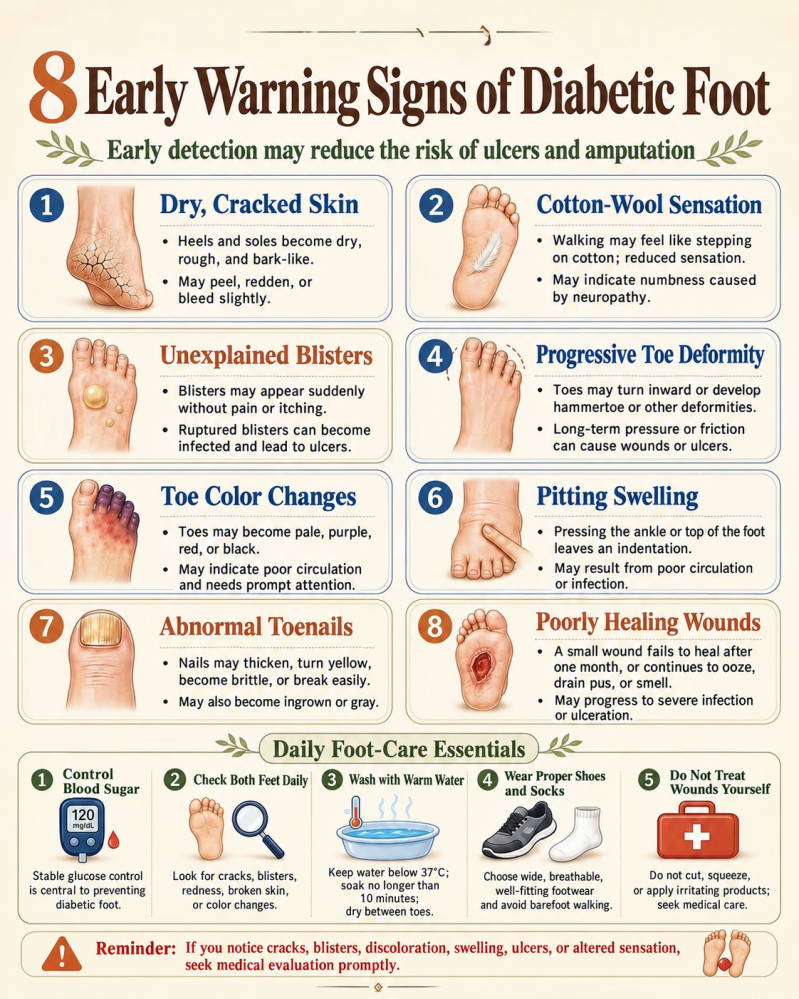
A feeling of “walking on cotton”
-
Poor balance or frequent falls
-
Reduced or absent ankle reflexes
3. Motor Nerves
As neuropathy progresses, the motor nerves that control muscles may also become involved.
Possible symptoms include:
-
Weakness in the toes or feet
-
Loss of muscle mass in the feet or lower legs
-
Changes in walking pattern
-
Difficulty lifting the front of the foot
-
Uneven pressure on different areas of the foot
-
Changes in foot shape
-
Increased risk of calluses and foot ulcers
Diabetic peripheral neuropathy is therefore not simply a problem of “loss of sensation.” It may affect small sensory fibers, large sensory fibers, and motor nerves at the same time.
Common Symptoms: Check Yourself
If you have diabetes or insulin resistance, pay attention to the following warning signs:
-
Numbness or tingling in the toes or soles
-
Burning, stabbing, shooting, or electric-shock pain
-
Pain that becomes worse at night
-
Feet that feel unusually hot or cold
-
Pain caused by light touch
-
Reduced ability to feel temperature, pain, or vibration
-
Feeling unsteady while walking
-
Frequent tripping or falling
-
Weakness or loss of muscle in the feet
-
Blisters, cuts, or wounds that do not hurt
-
Slow-healing wounds or repeated infections
Importantly, the absence of pain does not mean that the nerves are healthy.
For some people, the first sign of neuropathy is loss of protective sensation. A foot ulcer may develop before the person realizes that nerve damage is present. Reduced sensation can prevent someone from noticing burns, pressure, friction, or injuries, increasing the risk of infection, Charcot foot, and amputation.
Read the NIDDK Diabetes and Foot Problems Guide.
Not All Foot Numbness Is Caused by Diabetes
Numbness, pain, burning, or weakness may also be associated with:
-
Lumbar nerve compression or sciatica
-
Vitamin B12 deficiency, especially with long-term metformin use
-
Thyroid disease
-
Kidney disease
-
Peripheral artery disease
-
Alcohol-related nerve damage
-
Medication- or chemotherapy-induced neuropathy
-
Carpal tunnel syndrome or other nerve-entrapment conditions
A proper evaluation may include a medical history, examination of the skin and circulation, muscle-strength and reflex testing, and assessments of pressure, vibration, temperature, and protective sensation. Nerve-conduction studies or electromyography may be recommended when necessary.
The American Diabetes Association recommends screening for diabetic peripheral neuropathy:
-
At the time of diagnosis for people with Type 2 diabetes
-
Five years after diagnosis for people with Type 1 diabetes
-
At least once every year thereafter
Source: ADA Standards of Care in Diabetes—2026
When Should You Seek Immediate Medical Care?
Do not rely only on massage, foot soaking, or home observation if you notice:
-
A foot wound, ulcer, drainage, or foul odor
-
Sudden redness, swelling, warmth, or change in foot shape
-
Skin that becomes black, unusually pale, or cold
-
Sudden one-sided weakness or foot drop
-
Rapidly worsening pain
-
Fever or signs of infection
These symptoms require prompt medical evaluation.
High Blood Sugar Damages Blood Vessels Like Rust Damages Water Pipes
Think of your blood vessels as a network of water pipes that carries blood, oxygen, and nutrients throughout your body.
When blood sugar remains high for a long time, excess glucose begins to stick to proteins and fats inside the body. This process is called glycation. It produces harmful compounds known as advanced glycation end products, or AGEs.
You can think of AGEs as a sticky residue that gradually builds up inside the pipes. At the same time, high blood sugar produces excessive free radicals and oxidative stress—similar to the way oxidation causes a metal pipe to rust.
Your blood vessels do not literally rust, but the damage is comparable:
-
The protective inner lining of the blood vessels becomes irritated and damaged.
-
The vessel walls become stiffer and less flexible.
-
Inflammation increases.
-
Cholesterol and other substances can more easily collect along damaged areas.
-
Blood may not flow as smoothly as it should.
Over time, this “sugar coating and rusting” process can narrow and weaken the blood vessels, increasing the risk of atherosclerosis, heart attack, stroke, kidney disease, vision problems, poor circulation, and nerve damage.
This is why controlling blood sugar is about much more than preventing diabetes. It is also about protecting the body’s entire “pipeline system”—from the heart and brain to the eyes, kidneys, nerves, and feet.
Chronic high blood sugar → Glycation and AGEs → Oxidative stress and free radicals → Endothelial damage → Stiff, narrowed blood vessels → Increased risk of vascular complications

Early Detection Can Help Slow Progression
Managing diabetic neuropathy involves more than reducing numbness or pain. A comprehensive approach may also address:
-
Blood glucose levels and glucose fluctuations
-
Blood pressure and cholesterol
-
Nutritional status
-
Foot protection and daily foot care
-
Balance, mobility, and muscle strength
-
Other possible causes of nerve damage
At Spine & Joint Care TCM Clinic, we provide individualized evaluation and integrative supportive care. We look beyond the symptoms to understand your metabolic risks, lifestyle, physical function, and overall health.
Acupuncture and other supportive therapies may be included as part of a comprehensive care plan, but they do not replace appropriate diabetes management, medical evaluation, wound care, or specialist treatment when needed.
Pain Relief · Diabetes Reversal · Anti-Aging
Schedule an appointment with Dr. Li and begin with early identification and a comprehensive evaluation.
This article is provided for health-education purposes only. It is not a substitute for medical diagnosis or individualized treatment.